

By Mesfin Yimam, DVM, MS., Director, Pre-Clinical Research
Melatonin is a hormone produced by Pinealocytes of the pineal gland. While certain gastrointestinal mucosal cells, such as enterochromaffin cells, produce melatonin at levels approximately 400 times higher than the pineal gland, their activity is primarily limited to local functions.1 In contrast, melatonin produced in the brain receives significant attention due to its central role in regulating the sleep-wake cycle.
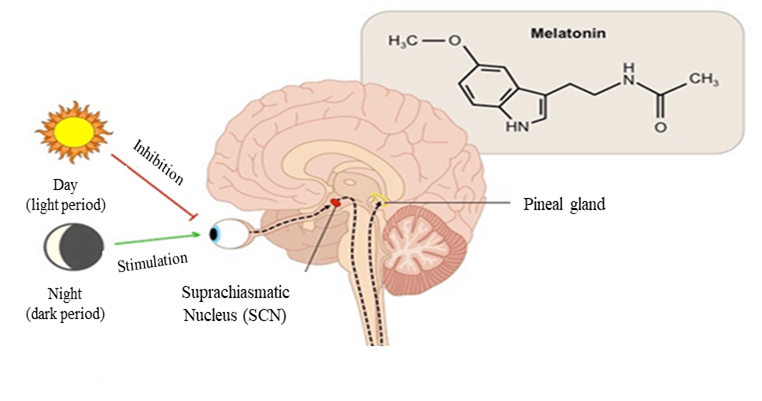
(Source: bioninja)
The Aging Melatonin System: Why Production Declines Over Time
The production of melatonin by the pineal gland does not remain consistent throughout life. As we age, progressive calcification of pinealocytes leads to a gradual decline in melatonin synthesis and secretion. By the age of 50, melatonin production typically decreases by about 50% compared to levels during childhood, particularly between the ages of 8 and 10, which are considered peak production years.2-5
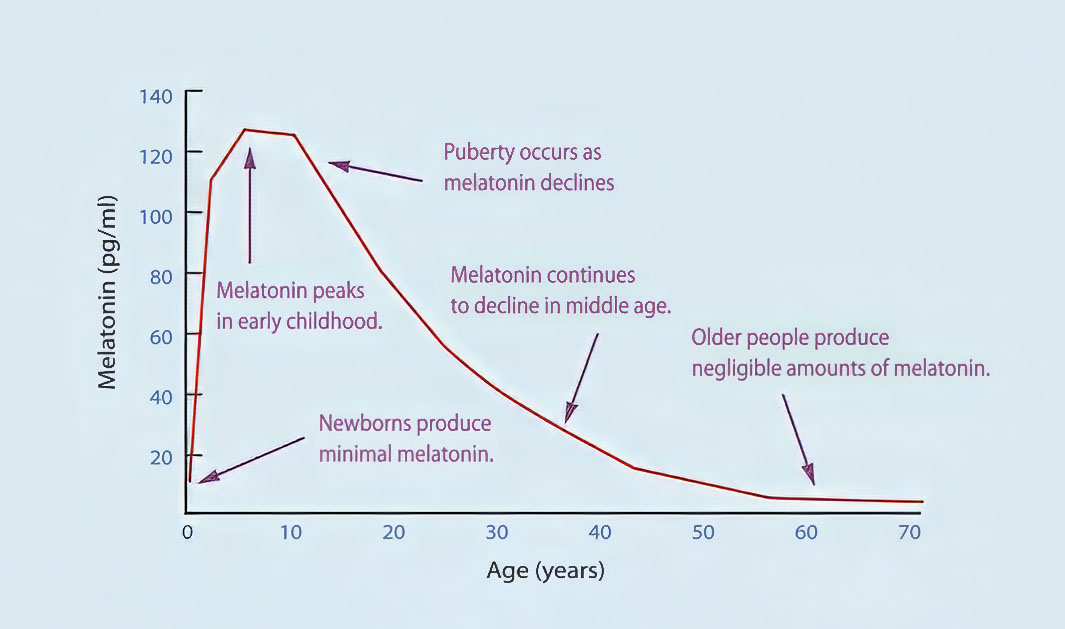
(Source: Grivas TB, Savvidou OD. Melatonin the “light of night” in human biology and adolescent idiopathic scoliosis. Scoliosis. 2007 Apr 4;2:6.)
Adults who maintain healthy melatonin levels often enjoy sound, restorative sleep and wake feeling refreshed. In contrast, older adults with a melatonin deficiency frequently experience disrupted sleep, including premature awakenings and difficulty falling back asleep which are key symptoms of poor sleep quality. In acute cases, this can lead to morning grogginess, daytime fatigue, impaired memory, attention deficits, and an overall decline in quality of life. Chronic sleep deprivation, in turn, can contribute to a host of serious health issues.
Among the most common age-related sleep complaints in older adults are fragmented and inconsistent sleep patterns, which interfere with sleep maintenance. When combined with difficulty falling asleep at night, achieving restorative sleep becomes increasingly challenging. As a result, many adults turn to melatonin supplements at bedtime to help initiate and sustain sleep.
The Science Behind Exogenous Melatonin and Its Limits
When consumed at a physiological dosage (0.5 – 1 mg),6 the role of melatonin in improving sleep is scientifically well-established, clinically validated, and extensively documented in peer-reviewed journals through numerous clinical studies and multiple meta-analyses. The collective body of evidence suggests that melatonin plays a key role in reducing the time it takes to fall asleep. These findings have led regulatory bodies such as the EFSA to support the use of melatonin at physiological doses before bedtime to promote sleep onset rather than sleep maintenance.7
In technical terms, the use of exogenous melatonin can be considered a form of hormone replacement therapy, which may contribute to hormonal imbalances and the potential overriding of the natural circadian rhythm.
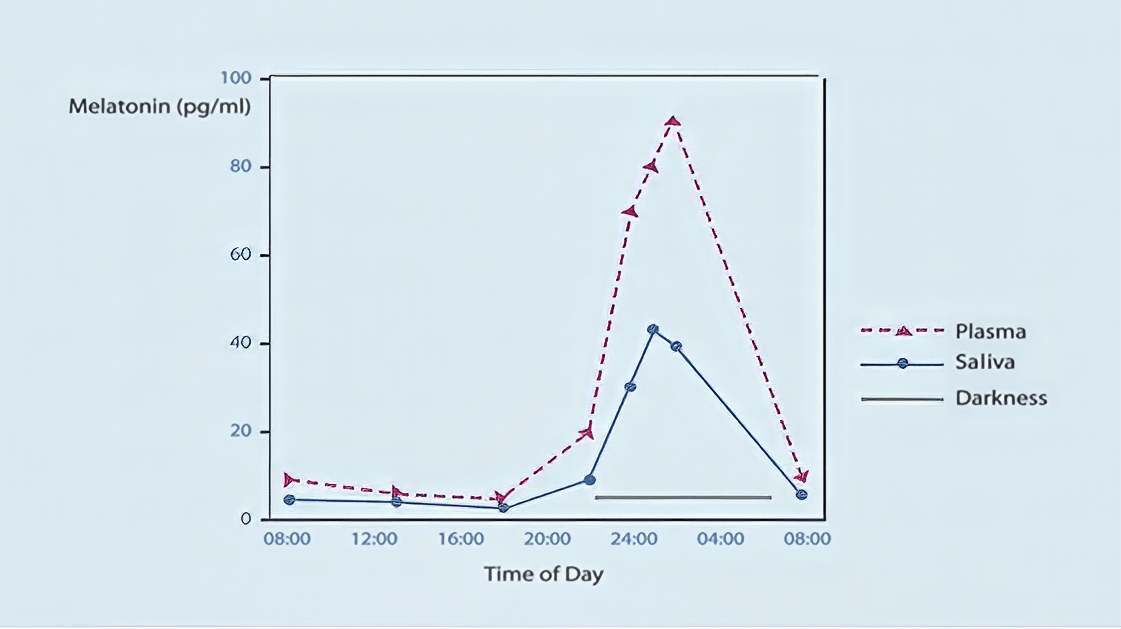
(Source: Grivas TB, Savvidou OD. Melatonin the “light of night” in human biology and adolescent idiopathic scoliosis. Scoliosis. 2007 Apr 4;2:6.)
Melatonin is generally well tolerated in the short term. However, not everyone responds equally well to exogenous melatonin, particularly at pharmacological doses (≥ 3 mg), which can result in elevated melatonin levels the following day. Some individuals may experience unwanted side effects, such as vivid dreams or nightmares, morning grogginess often referred to as a ‘melatonin hangover’ or disruptions to their circadian rhythm, leading to phase shifts that either advance or delay their biological clock. 9-11
The Case for Endogenous Support: Maizinol®’s Triple-Action Mechanism
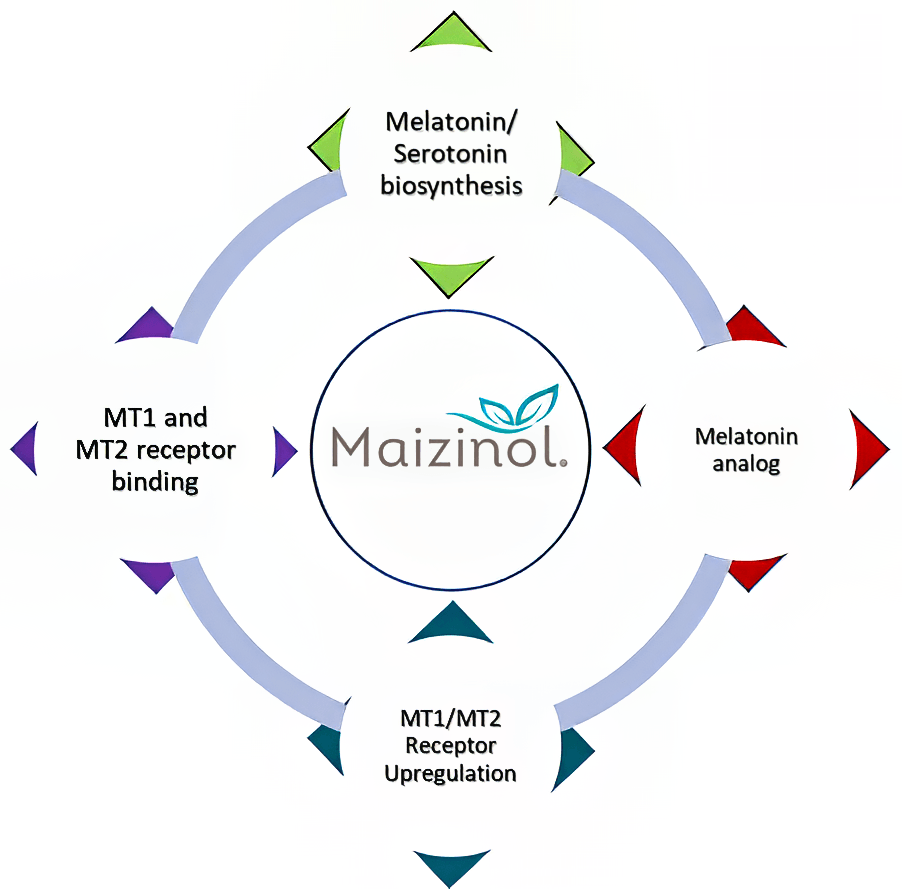
This has led to interest in alternatives that stimulate the body’s natural melatonin production. Until recently, options for promoting endogenous melatonin synthesis were limited. Unigen’s Maizinol®, a hormone-free, standardized corn leaf extract, has been shown to have triple actions: 1. to support the body’s own melatonin production; 2. upregulate its MT1 and MT2 receptors at gene and protein levels; 3. binding directly to MT1 and MT2 receptors.12,13 These mechanisms give Maizinol® a competitive advantage for those who are sensitive to melatonin supplements or who prefer a more natural approach to sleep support.
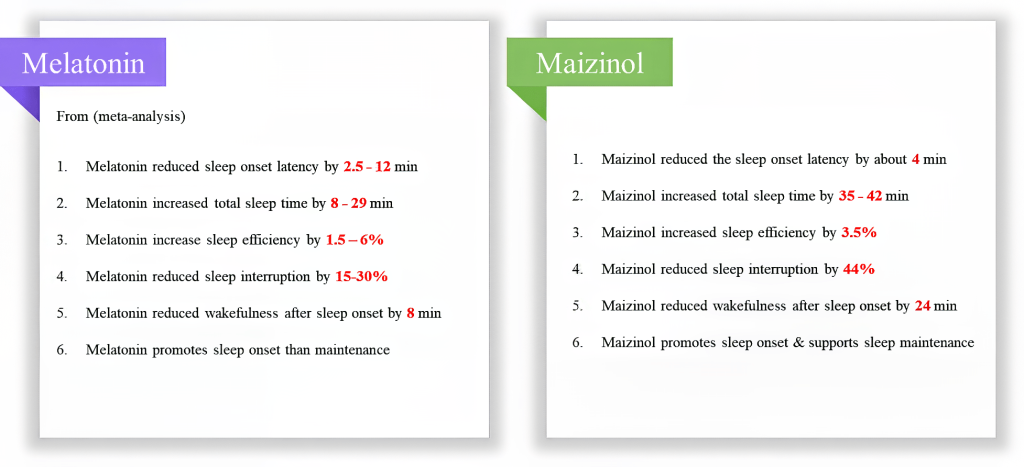
Multiple clinical studies have demonstrated that Maizinol® alone offers significant benefits in promoting quality, restorative sleep.13-15 In our comparative analysis against melatonin reported from Meta Analyses,16-21 Maizinol® was found to be more effective in maintaining sleep rather than initiating it. Therefore, Maizinol® use as a stand alone or in combination with melatonin especially for aging population may offer a complementary solution helping the body transition into sleep more quickly while also supporting uninterrupted, sustained rest.
Maizinol® vs. Melatonin: Complementary, Not Competing
Whether to combine Maizinol® with melatonin is ultimately a personal choice. However, Maizinol® on its own has been shown to help individuals fall asleep faster, reduce the number of nighttime awakenings, shorten periods of wakefulness during the night, support longer sleep duration, promote healthy sleep patterns, enhance restful deep sleep, and improve overall sleep efficiency. It is generally well tolerated and does not cause morning grogginess, daytime fatigue, memory impairment, or attention deficits which are side effects commonly associated with traditional sleep medications and high doses of exogenous melatonin. This makes Maizinol® an appealing and effective option for natural sleep support.
References
- Acuña-Castroviejo D, Escames G, Venegas C, Díaz-Casado ME, Lima-Cabello E, López LC, Rosales-Corral S, Tan DX, Reiter RJ. Extrapineal melatonin: sources, regulation, and potential functions. Cell Mol Life Sci. 2014 Aug;71(16):2997-3025
- Iguichi H, Kato KI, Ibayashi H. Age-dependent reduction in serum melatonin concentrations in healthy human subjects. J Clin Endocrinol Metab. 1982 Jul;55(1):27-9.
- Karasek M. Melatonin, human aging, and age-related diseases. Exp Gerontol. 2004 Nov-Dec;39(11-12):1723-9.
- Karasek M. Does melatonin play a role in aging processes? J Physiol Pharmacol. 2007 Dec;58 Suppl 6:105-13.
- Doneta A., Norina F., Bogdan-Stefan A., Natalia R. Antioxidant and anti-inflammatory properties of melatonin and micronutrients in patients with periodontal disease. Romanian Journal of Oral Rehabilitation. Vol. 13, No.4 October-December 2021.
- Zhdanova IV, Wurtman RJ, Regan MM, Taylor JA, Shi JP, Leclair OU. Melatonin treatment for age-related insomnia. J Clin Endocrinol Metab. 2001 Oct;86(10):4727-30.
- European Food Safety Authority. Scientific Opinion on the substantiation of a health claim related to melatonin and reduction of sleep onset latency (ID 1698, 1790, 4080) pursuant to Article 13(1) of Regulation (EC) No 1924/2006, EFSA Journal, 2011;9:2241.
- Grivas TB, Savvidou OD. Melatonin the “light of night” in human biology and adolescent idiopathic scoliosis. Scoliosis. 2007 Apr 4;2:6.
- Besag FMC, Vasey MJ, Lao KSJ, Wong ICK. Adverse Events Associated with Melatonin for the Treatment of Primary or Secondary Sleep Disorders: A Systematic Review. CNS Drugs. 2019 Dec;33(12):1167-1186
- Buscemi N, Vandermeer B, Hooton N, Pandya R, Tjosvold L, Hartling L, Baker G, Klassen TP, Vohra S. The efficacy and safety of exogenous melatonin for primary sleep disorders. A meta-analysis. J Gen Intern Med. 2005 Dec;20(12):1151-8.
- Lewy AJ, Sack RL. Exogenous melatonin’s phase-shifting effects on the endogenous melatonin profile in sighted humans: a brief review and critique of the literature. J Biol Rhythms. 1997 Dec;12(6):588-94.
- Kim HJ, Kim H, Kim YJ, Do SG, et al. UP165, standardized corn leaf extract and its active component 6-methoxybenzoxazolinone induce non-rapid eye movement sleep through melatonergic and GABAergic mechanisms, Food Bio. 2024, Volume 61. https://doi.org/10.1016/j.fbio.2024.104584.
- Talbott SM, Talbott JA, Brownell L, Yimam M. UP165, A Standardized Corn Leaf Extract for Improving Sleep Quality and Mood State. J Med Food. 2023 Jan;26(1):59-67
- Kalman DS, Feldman S, Vazquez RR, Krieger DR. A Prospective Randomized Double-Blind Study Evaluating UP165 and S-Adenosyl-l-Methionine on Depression, Anxiety and Psychological Well-Being. Foods. 2015 May 8;4(2):130-139.
- Yimam, M., Jia, Q., Doma, KM., Zamzam, A., Crowley, DC., Guthrie, N., Lewis ED. A randomized, triple-blind, placebo controlled trial investigating a standardized corn leaf extract on sleep in healthy adults with sleep difficulties. Sleep 2025. June 9 – 12, 2025. Seattle.
- Brzezinski A, Vangel MG, Wurtman RJ, Norrie G, Zhdanova I, Ben-Shushan A, Ford I. Effects of exogenous melatonin on sleep: a meta-analysis. Sleep Med Rev. 2005 Feb;9(1):41-50.
- Salanitro M, Wrigley T, Ghabra H, de Haan E, Hill CM, Solmi M, Cortese S. Efficacy on sleep parameters and tolerability of melatonin in individuals with sleep or mental disorders: A systematic review and meta-analysis. Neurosci Biobehav Rev. 2022 Aug;139:104723.
- Ferracioli-Oda E, Qawasmi A, Bloch MH. Meta-analysis: melatonin for the treatment of primary sleep disorders. PLoS One. 2013 May 17;8(5):e63773.
- Li T, Jiang S, Han M, Yang Z, Lv J, Deng C, Reiter RJ, Yang Y. Exogenous melatonin as a treatment for secondary sleep disorders: A systematic review and meta-analysis. Front Neuroendocrinol. 2019 Jan;52:22-28.
- Auld F, Maschauer EL, Morrison I, Skene DJ, Riha RL. Evidence for the efficacy of melatonin in the treatment of primary adult sleep disorders. Sleep Med Rev. 2017 Aug;34:10-22.
- Ohayon MM, Carskadon MA, Guilleminault C, Vitiello MV. Meta-analysis of quantitative sleep parameters from childhood to old age in healthy individuals: developing normative sleep values across the human lifespan. Sleep. 2004 Nov 1;27(7):1255-73.